The Moment the Jury Gets Lost
You’ve prepared for months.
Experts are lined up.
Medical records fill binders.
Then your orthopedic surgeon takes the stand.
He explains the fracture pattern, the nerve impingement, the surgical hardware and fusion levels. The testimony is accurate. It is thorough. It is also confusing.
You glance at the jury.
One juror tilts their head. Another looks down at the exhibits. A third blinks slowly, trying to follow along.
At that moment, the case is no longer about evidence.
It becomes about understanding.
This is exactly where medical animation for litigation changes the outcome.
Why Complex Injuries Need Visual Explanation
Medical injuries rarely happen in simple, visible ways. Most involve layers of anatomy, internal damage, and surgical repair.
However, jurors are not medical professionals. They rely on what they can see and remember. Long explanations often fade quickly. Visuals stay with them.
Medical animation bridges that gap.
Instead of hearing about a herniated disc compressing a nerve root, the jury watches the pressure build in a clear, step-by-step sequence. Instead of imagining a surgical repair, they see the procedure unfold.
As a result, confusion turns into clarity.
A Real Case From the Animation Studio
Not long ago, an attorney brought us a catastrophic motorcycle crash case.
Liability was not obvious. The road was clear by the time investigators arrived. No photographs showed what caused the wreck.
The defense suggested rider error. Their position was simple: no proof, no responsibility.
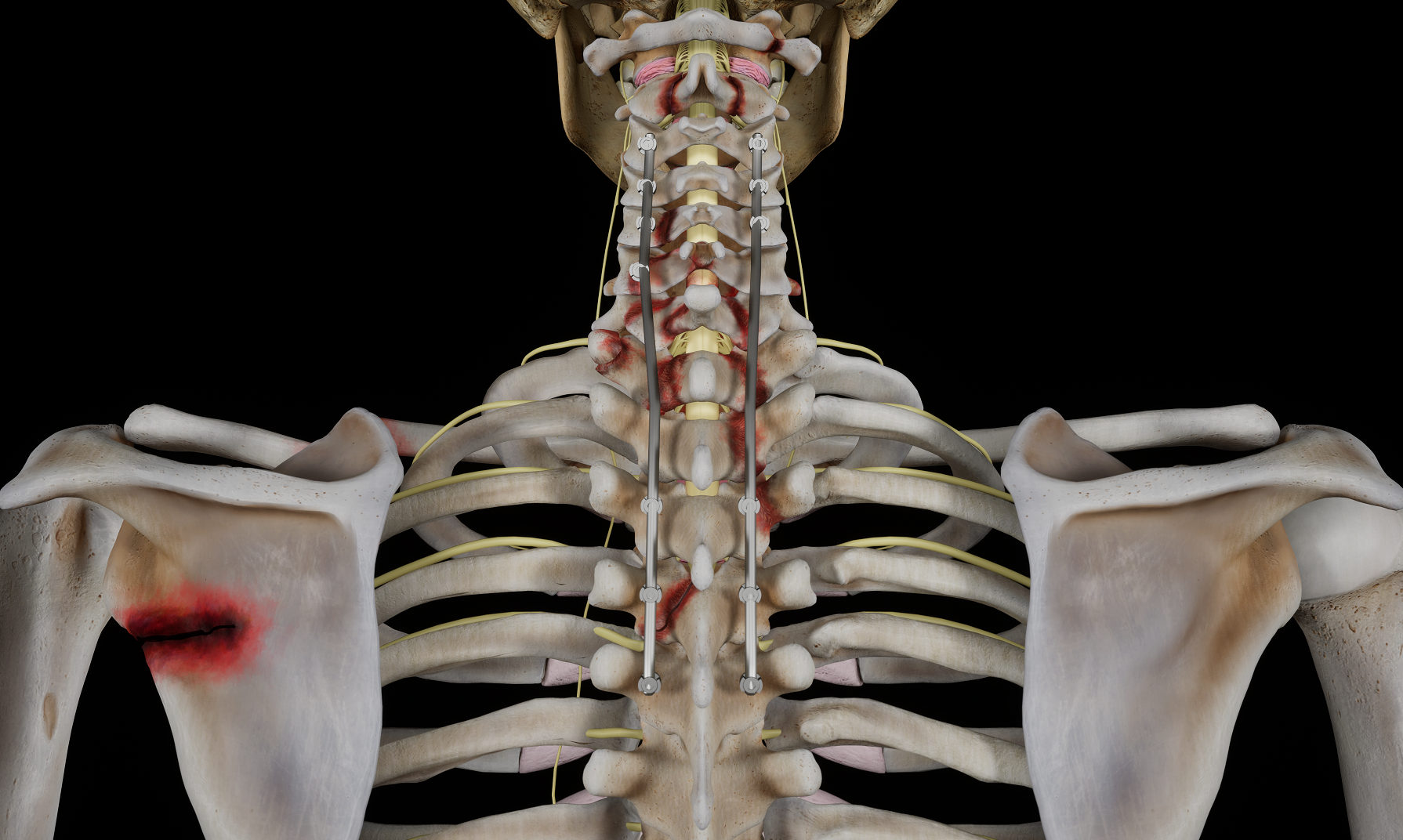
However, the rider had struck a debris field from fallen eucalyptus branches. The impact launched him into the roadway. He suffered severe spinal fractures from C1 through T7 and required emergency transport for surgery.
The legal team needed a way to show what was no longer visible.
Rebuilding the Scene From the Ground Up
First, the attorneys and experts returned to the accident site.
They scanned the roadway and surrounding trees using drone-based 3D laser technology.
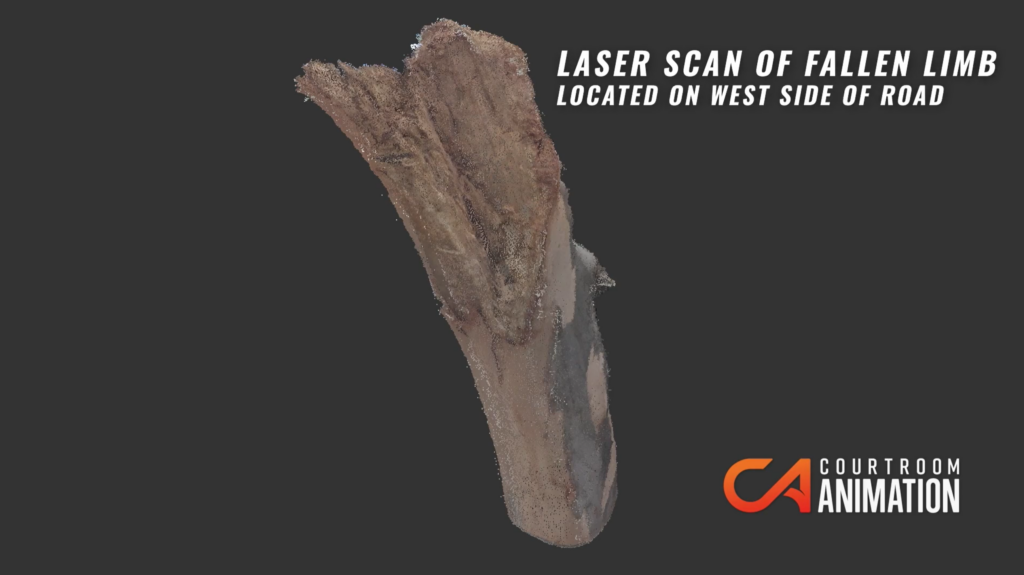
Then, they located the actual broken limb involved in the crash.
The scan data allowed experts to match that limb to a specific tree overhanging the road.
At the same time, the team searched for witnesses.
Community mailers brought in several responses. Residents reported a long history of falling branches along that stretch of roadway. An investigating officer confirmed prior complaints about the hazard.
Piece by piece, the liability picture became clearer.
Turning Technical Evidence Into a Story
Next, we built the visuals.
First, we reconstructed the roadway and debris field using the laser-scan data.
Then, we animated the motorcycle’s path over the rise in the road.
After that, we illustrated the impact and the rider’s ejection into the debris.
We also created medical animations that showed the spinal fractures and surgical procedures.
Finally, a day-in-the-life video documented the rider’s daily struggles after the crash.
The Moment the Case Shifted
When the visual evidence came together, the case changed.
The reconstruction showed the exact debris field length.
The matched tree limb established the source of the hazard.
The medical animation revealed the full extent of the spinal trauma.
The facts were no longer abstract.
They were visible.
According to trial attorney Steve Vartazarian:
“The animations of that surgery were key in this case because we were able to demonstrate exactly how extensive these injuries were.”
The Outcome
With the liability established and the injuries clearly illustrated, the case moved toward resolution.
The result: a $39.1 million settlement against the responsible governmental entity.
Nothing about the underlying facts changed.
What changed was the clarity.
The jury and defense could see the debris field.
They could see the broken limb.
They could see the damage to the rider’s spine.
And that understanding made the difference.
How Medical Animation Videos Help Explain Complex Cases
Medical animation does more than decorate testimony. It supports it.
1. Clarifies Mechanism of Injury
Animations show exactly how the injury occurred. Jurors see the forces, angles, and internal damage. This visual sequence helps them connect the accident to the medical outcome.
2. Simplifies Medical Terminology
Terms like “radiculopathy” or “comminuted fracture” mean little to most jurors. Visuals translate those terms into clear, memorable images.
3. Reinforces Expert Testimony
When an expert explains a procedure alongside animation, comprehension improves. Jurors hear the explanation and see it at the same time. That dual input increases retention.
4. Demonstrates Future Impact
Animations can illustrate permanent limitations, hardware placement, or degenerative changes. This helps jurors understand long-term consequences, not just immediate injuries.
Where Medical Animation Fits in a Case
Attorneys often assume animation is only for trial. In reality, it adds value much earlier.
For example:
- During mediation to show the seriousness of injuries.
- In settlement demand packages to strengthen damages.
- At focus groups to test jury reactions.
- In trial presentations to support expert testimony.
Because of this flexibility, medical animation often influences outcomes long before a verdict.
What Makes an Animation Credible in Court
Accuracy matters more than visual appeal.
A proper litigation animation is built from:
- Medical records
- Imaging studies
- Operative reports
- Expert opinions
Every movement, angle, and anatomical detail must reflect the evidence. When done correctly, the animation becomes a powerful piece of demonstrative evidence rather than a dramatic reenactment.
Signs Your Case Could Benefit From Medical Animation
Consider animation when:
- The injury involves internal anatomy.
- The surgery is complex or unfamiliar.
- The defense minimizes the severity of harm.
- The jury must understand long-term medical impact.
- Expert testimony includes technical language.
If jurors must imagine the injury, animation can help them see it.
The Goal: Understanding, Not Just Presentation
At its core, medical animation for litigation is about communication. Attorneys already have strong evidence. The challenge is making that evidence clear, memorable, and believable.
When jurors truly understand what happened inside the body, decisions often change. Settlement positions shift. Verdicts become more favorable.
The facts stay the same.
The clarity improves.
Ready to take your case to the next level? Contact us today or learn more by downloading our FREE eBook!
Free eBook: The Complete Introduction to Forensic Animation
Whether you are considering animation for one of your cases, or you simply want to be prepared for when the other party uses an animation, our eBook is your guide to understanding forensic animation.