The Courtroom Advantages of Courtroom Animation
I sit in a quiet room most days. No jury, judge or objections; just files, expert reports, depositions, and accident data.
Before a jury ever sees a case, I do. And I can usually tell within an hour whether the story will survive a courtroom. Not because of the law, because of clarity.
I build courtroom animations for a living; working with trial attorneys, legal aids, and paralegals every week. I see weak cases become understandable.
So when attorneys ask, “Do we really need animation?”
I answer with a different question:
Will a stranger understand this case the way you do?
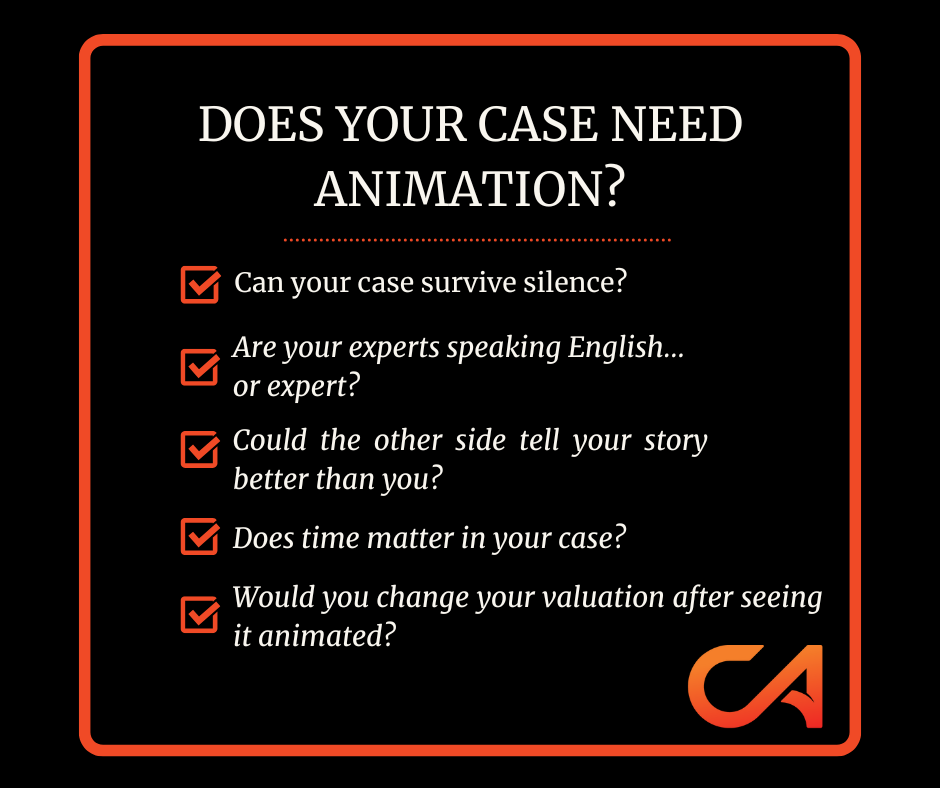
Here are five questions I recommend asking before you decide.
1. Can your case survive silence?
No narrator, legal argument or expert voice.
Just events.
When we animate a case, we remove the persuasion first. We test the facts visually.
If the timeline feels confusing on screen, a jury will feel lost. When movements look unrealistic, credibility drops. If causation feels thin, liability weakens.
Animation exposes gaps early. That helps attorneys fix them, or settle wisely.
Courtroom advantage: fewer surprises at trial.
2. Are your experts speaking English… or expert?
I respect experts. We rely on them.
But jurors do not think in medical terms or physics formulas.
They think in pictures.
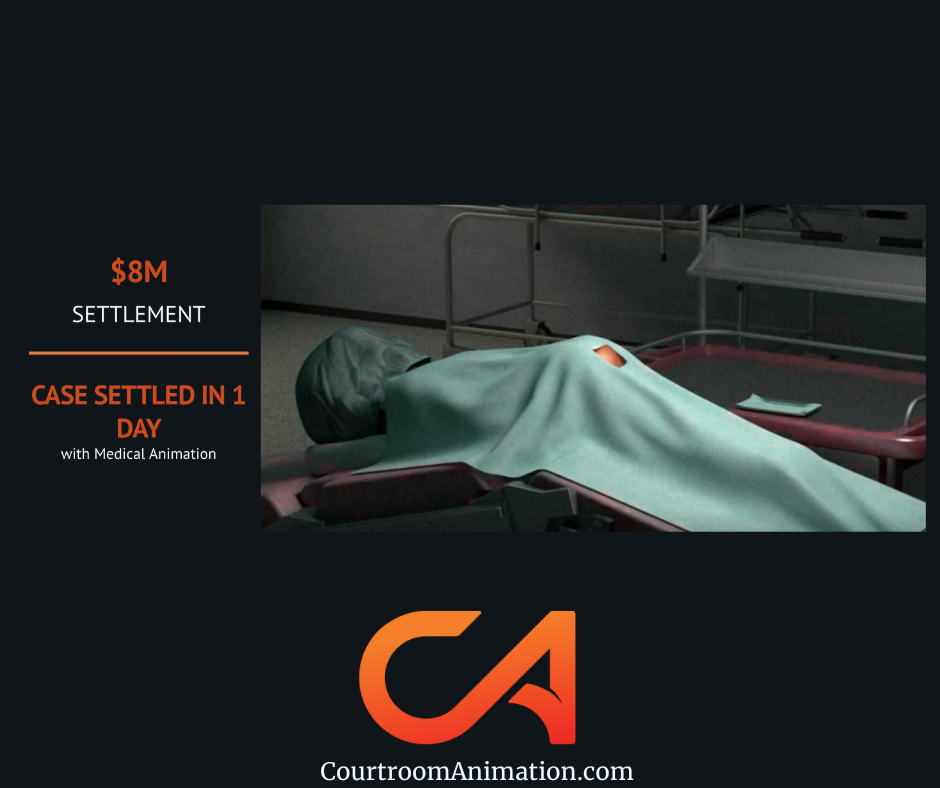
When an orthopedic surgeon says, “Posterior displacement at L4-L5,” most jurors freeze.
When they see the disc move, they understand instantly.
That is the purpose of courtroom animation. Not drama. Translation.
Courts recognize this. That is why forensic animations are treated as demonstrative evidence when they reflect expert opinions and real data.
Courtroom advantage: testimony that sticks.
3. Could the other side tell your story better than you?
This happens more than attorneys expect.
Opposing counsel hires animators first.
They set the visual narrative.
Your team responds with words.
Jurors remember images.
Studies summarized by the Federal Judicial Center show that visual evidence improves comprehension and recall compared to testimony alone. Source
If the other side controls the visuals, they shape memory. This is not a technical issue. This strategy.
Courtroom advantage: narrative ownership.
4. Does time matter in your case?
Most cases hinge on seconds.
- When the brakes engaged
- When a doctor intervened
- When a warning appeared
- When impact occurred
Humans struggle with timelines.
We build cases frame by frame. Sequence becomes obvious. Cause follows effect.
In personal injury, medical malpractice, product liability, and criminal defense, this clarity changes how liability feels.
Not emotionally. Logically.
Courtroom advantage: fewer juror misunderstandings.
5. Would you change your valuation after seeing it animated?
This is the uncomfortable one.
Attorneys know their files intellectually.
Animation forces you to confront them visually.
We often hear:
“I didn’t realize the distance was that short.”
“I didn’t see how obstructed the view really was.”
“That surgery looks more invasive than I expected.”
That changes strategy.
Sometimes toward trial.
Sometimes toward settlement.
Both outcomes protect the client.
Courtroom advantage: informed decisions.
Why courtroom animation works
Jurors do not store facts like spreadsheets.
They store scenes.
Animation builds a shared memory of events.
When animation is built from evidence and expert data, it becomes a neutral witness that never forgets, contradicts, or becomes nervous on cross.
At Courtroom Animation, we focus on three things:
Accuracy.
Admissibility.
Clarity.
This is why our animations maintain a 99% admissibility rate and have supported over 2,000 cases nationwide.
From the animator’s chair
We are not here to decorate arguments. We are here to pressure-test them.
Good animation strengthens good cases.
It exposes weak ones early.
These outcomes save time, money, and credibility.
Final thought
If your case is simple, words may work.
If it involves:
- Motion
- Medicine
- Machines
- Or disputed timelines
then visuals stop being optional. They become part of competent preparation.
You do not hire animation to impress jurors. You hire animators to protect your case from misunderstanding.
Want to see how this works in practice?
Our free eBook explains:
- How forensic animation is built
- How courts evaluate admissibility
- How to work with experts
- What timelines look like behind the scenes
Free eBook: The Complete Introduction to Forensic Animation
Whether you are considering animation for one of your cases, or you simply want to be prepared for when the other party uses an animation, our eBook is your guide to understanding forensic animation.