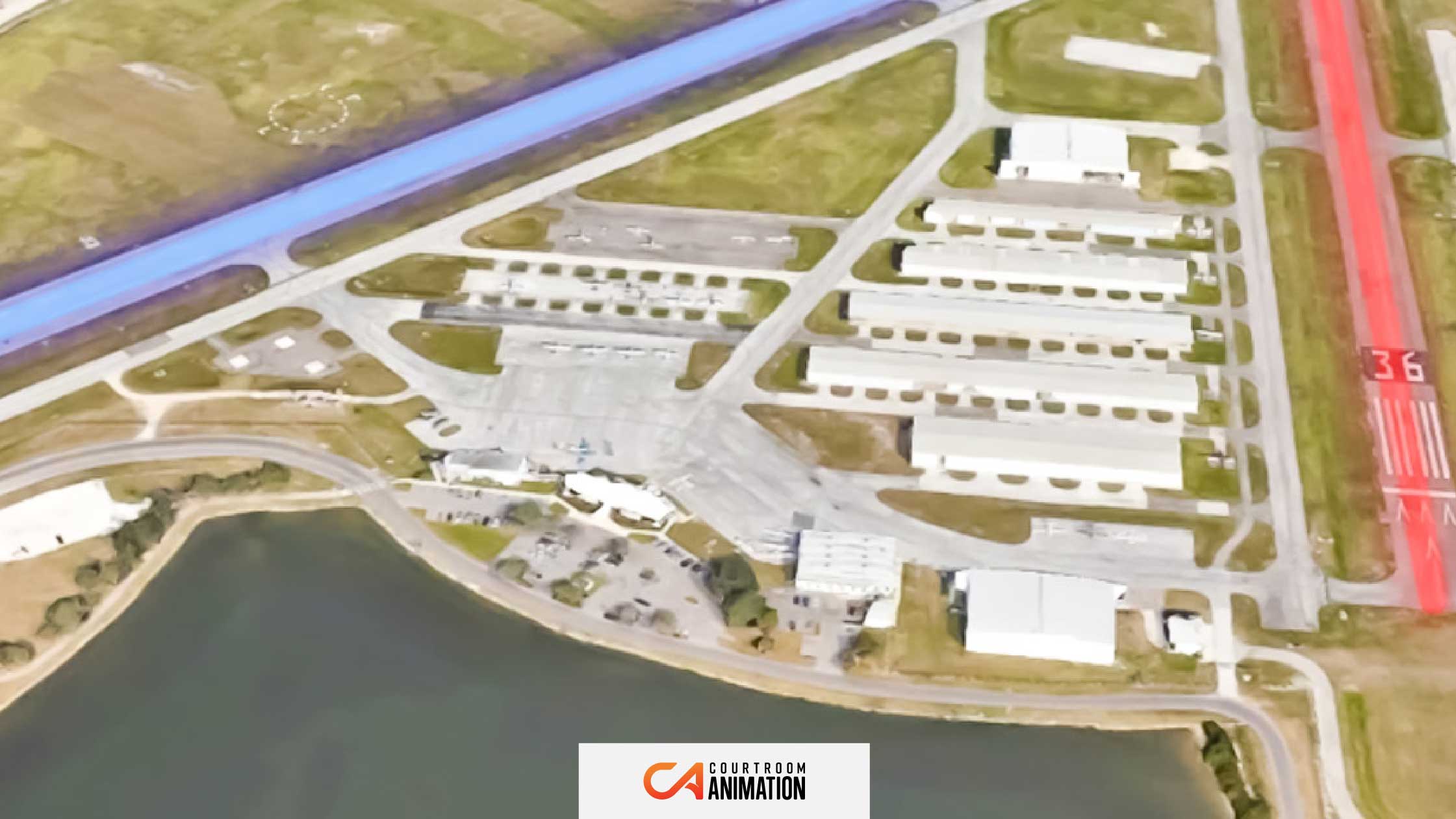
Technology continues to reshape litigation. Today, attorneys have access to tools that simply didn’t exist a decade ago, making it easier than ever to present complex evidence with accuracy and confidence. One of the biggest advancements has been the use of 3D laser scanners in forensic 3D animation.
At Courtroom Animation, we’ve seen firsthand how laser scanning has changed the way legal graphics are created. Instead of estimating measurements or relying solely on photographs, we capture millions of precise data points that allow us to recreate real-world environments with remarkable accuracy.
As a result, attorneys can present judges, juries, mediators, and opposing counsel with animations that are not only compelling but also scientifically supported.
Why 3D Laser Scanning Matters in Forensic 3D Animation
Every forensic animation starts with one goal: accuracy.
The more accurate the digital environment, the more confidence experts have in the finished animation. Therefore, 3D laser scanning has become one of the most valuable tools in modern accident reconstruction, product liability, construction litigation, premises liability, and crime scene documentation.
Rather than relying only on photographs or manual measurements, laser scanners capture millions of individual points that create an exact digital representation of a scene.
That level of detail removes much of the guesswork involved in traditional 3D modeling.

How Does a 3D Laser Scanner Work?
Think of a 3D laser scanner as a camera that measures distance instead of simply capturing photographs.
The scanner projects laser light across the surrounding environment. It then measures the time or angle required for the laser to return after striking nearby objects.
As the scanner rotates, it records millions of measurements from every visible surface.
The result is known as a point cloud—a highly accurate digital map of the scene.
Our artists use that point cloud as the foundation for building forensic 3D animations that accurately reflect real-world dimensions, elevations, curves, and object placement.
Because every model begins with measurable data, the finished animation provides experts with a reliable visual tool for explaining their opinions.
How 3D Laser Scanning Improves Forensic 3D Animation
Accuracy
Accuracy has always been the foundation of admissible demonstrative evidence.
Whether we’re recreating a vehicle collision, documenting a crime scene, or illustrating a machinery failure, laser scanning gives us measurements we can trust.
Consequently, experts spend less time debating dimensions and more time explaining the conclusions drawn from the evidence.
Efficiency
Creating detailed 3D environments by hand once required hundreds of hours of modeling.
Today, point clouds dramatically reduce that workload.
Instead of building an entire scene from photographs alone, our artists begin with an accurate digital blueprint. Therefore, projects often move faster while maintaining exceptional quality.
Realism
Jurors expect visuals to look realistic.
Fortunately, laser scanning captures subtle roadway grades, building geometry, vegetation, guardrails, machinery, and countless other details that would otherwise require manual recreation.
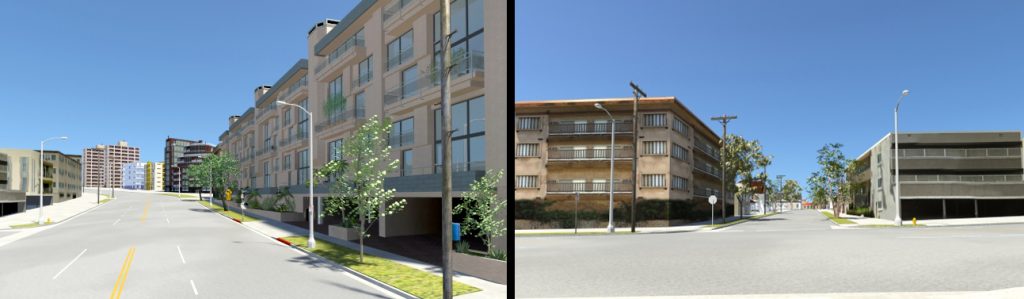
The finished animation feels authentic because it starts with the actual environment.
Three Ways 3D Laser Scanning Benefits Your Case
1. Stronger Demonstrative Evidence
Courts expect demonstrative exhibits to fairly and accurately represent the available evidence.
For that reason, we work closely with attorneys and expert witnesses throughout production.
Whether we’re illustrating a line-of-sight issue, a time-distance analysis, or a product failure, the animation reflects expert opinions supported by measurable data—not artistic interpretation.
Our team is proud to maintain a 99% admissibility rate by following that process.
2. Greater Impact on Decision-Makers
Complex testimony becomes easier to understand when people can see it.
For example, instead of asking jurors to imagine roadway geometry or equipment movement, forensic animation lets them visualize the event as the expert explains it.
As a result, technical testimony becomes more engaging, easier to follow, and easier to remember.
3. Better Value
Detailed 3D environments once required extensive manual modeling from photographs, survey notes, and aerial imagery.
Today, laser scanning significantly reduces production time by providing an accurate digital foundation.
Additionally, we often combine scanned environments with real-world photography to create hybrid animations that deliver outstanding visual quality while helping clients manage costs.
Common Mistake: Waiting Too Long to Scan the Scene
One of the biggest mistakes attorneys make is waiting until litigation is well underway before documenting the scene.
However, accident locations change quickly.
Roadways are resurfaced.
Construction begins.
Landscaping changes.
Vehicles are repaired or destroyed.
Equipment is modified.
Whenever possible, scanning a scene early preserves evidence exactly as it existed. That data can prove invaluable months—or even years—later.
2026 Trend: Laser Scanning Is Now Part of a Larger Digital Workflow
Modern forensic animation rarely relies on one technology alone.
Today, many projects combine:
- 3D laser scanning (LiDAR)
- Drone photogrammetry
- High-resolution aerial imagery
- GPS survey data
- BIM and CAD models
- Body-worn camera footage
- Medical imaging such as CT and MRI scans
By integrating multiple data sources, attorneys receive a more complete reconstruction that supports expert testimony from every angle.
Why Accuracy Still Comes First
Technology has changed dramatically over the past decade.
However, one thing has remained the same.
The best forensic animation is only as good as the evidence behind it.
That’s why we work directly with attorneys, accident reconstructionists, engineers, physicians, and other experts throughout the production process. Every animation is designed to educate—not exaggerate.
When the underlying data is accurate, the finished animation becomes a powerful demonstrative exhibit that helps jurors understand complicated evidence with confidence.
Learn More About 3D Laser Scanning and Forensic 3D Animation
Every case presents different challenges.
Whether you need a laser-scanned accident scene, a medical animation, a product liability reconstruction, or a detailed line-of-sight study, our team works closely with your experts to create scientifically accurate visual evidence.
If you’re considering forensic 3D animation for mediation or trial, we’d be happy to discuss your case and recommend the right solution.
We encourage you to check out our client testimonials and browse through our results page to get an idea of what we do and what we can offer you. We look forward to hearing from you and working with you soon.
FAQ
What is a 3D laser scanner?
A 3D laser scanner captures millions of precise measurements from a physical environment to create an accurate digital point cloud used in forensic animation and accident reconstruction.
How does laser scanning improve forensic animation?
Laser scanning provides precise measurements that help create scientifically accurate models for courtroom animations and expert testimony.
Can laser-scanned animations be admitted into court?
Yes. When properly authenticated and supported by expert testimony, laser-scanned forensic animations are commonly admitted as demonstrative evidence.
What types of cases benefit from 3D laser scanning?
Motor vehicle accidents, premises liability, product liability, construction defects, crime scenes, industrial accidents, and engineering failures all benefit from laser scanning.
When should attorneys schedule laser scanning?
As early as possible. Capturing a scene before conditions change helps preserve critical evidence and improves the accuracy of later forensic animations.
Free eBook: The Complete Introduction to Forensic Animation

Whether you are considering animation for one of your cases, or you simply want to be prepared for when the other party uses an animation, our eBook is your guide to understanding forensic animation.
Topics: