Introduction
Most attorneys think about litigation graphics when preparing for trial. However, some of the biggest wins happen long before a jury ever enters the courtroom.
Today, mediation, settlement conferences, and case evaluations resolve the vast majority of civil disputes. As a result, attorneys who explain complex evidence clearly often gain leverage before trial even begins.
Well-designed litigation graphics help mediators, opposing counsel, insurance adjusters, and judges understand your case faster. More importantly, they demonstrate preparation, strengthen expert opinions, and encourage meaningful settlement discussions.
If you’re investing hundreds of hours preparing a case, don’t wait until trial to show your strongest evidence.
1. Litigation Graphics Strengthen Mediation Presentations
Most civil cases settle before trial.
Therefore, mediation deserves the same level of preparation as a courtroom presentation.
During mediation, legal graphics help everyone understand the key issues quickly. Instead of relying on lengthy explanations, attorneys can present timelines, medical illustrations, accident reconstructions, or animations that clearly explain what happened.
As a result, mediators spend less time interpreting evidence and more time evaluating the strengths of the case.
Why it works
Encourages productive negotiations
Simplifies complex evidence
Highlights liability
Strengthens expert opinions
2. Litigation Graphics Improve Settlement Conferences
Settlement conferences often happen inside a judge’s chambers rather than a courtroom.
Even so, first impressions still matter.
Judges appreciate presentations that respect their time while clearly explaining technical evidence. Consequently, litigation graphics can reduce confusion and keep discussions focused on the facts.
Instead of asking a judge to imagine an engineering failure or complicated medical procedure, attorneys can simply show it.
Complex evidence becomes much easier to understand.
3. Litigation Graphics Add Leverage During Direct Settlement Talks
Sometimes the audience isn’t a jury.
Sometimes it’s opposing counsel.
A strong visual presentation signals preparation. More importantly, it tells the other side you’re ready to explain your case at trial if negotiations fail.
We’ve repeatedly heard attorneys describe the same reaction: once the animation starts, the conversation changes.
Instead of debating hypotheticals, everyone focuses on the evidence.
That shift alone can create valuable settlement leverage.
Email Exchange Settlements
In today’s modern world settlements can happen entirely over email. Litigation graphics and animations can easily be attached to an email, which shows the opposition that you know your case inside and out and are ready for trial.
This could result in the opposition choosing to settle rather than spending time putting together a defense against an opponent that is clearly prepared and ready to go.
4. Litigation Graphics Make Email Settlement Packages More Persuasive
Today’s negotiations don’t always happen in conference rooms.
Many occur through email, video meetings, or digital case management systems.
Fortunately, litigation graphics travel just as well.
Medical illustrations, timelines, animations, and interactive exhibits can all accompany demand packages or mediation briefs.
As a result, decision-makers who weren’t present during negotiations can still understand your argument exactly as intended.
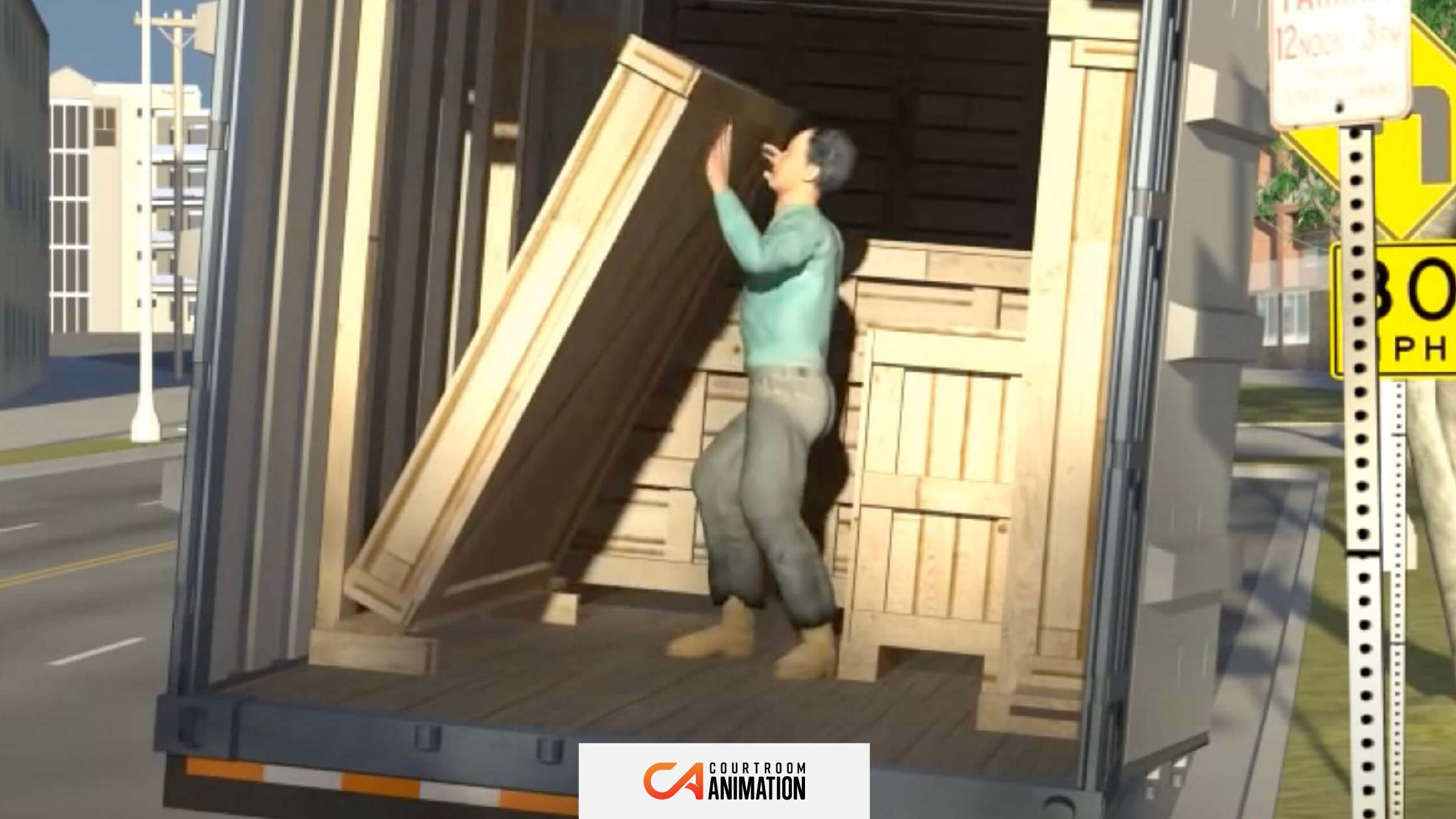
Here is an example of an animation that was used in mediation to persuade the fact finder:
5. Litigation Graphics Improve Mock Mediations
Before trial, many firms test their arguments using mock juries or mock mediations.
This is also the ideal time to evaluate your litigation graphics.
Ask simple questions:
- Did viewers understand the sequence?
- Were expert opinions clear?
- Which exhibits generated questions?
- Which visuals created the strongest reactions?
Feedback allows attorneys to improve graphics long before they appear in mediation or trial.
2026 Trend: Attorneys Use Litigation Graphics Earlier Than Ever
One noticeable shift over the past few years is timing.
Rather than waiting until trial, many firms now begin creating litigation graphics during discovery.
Early visuals help attorneys:
- evaluate liability
- organize evidence
- collaborate with experts
- strengthen mediation presentations
- identify weaknesses before trial
Consequently, graphics have become strategic planning tools—not simply trial exhibits.
Real-World Example
One of our clients used a forensic animation during mediation to explain a complex accident involving multiple expert opinions.
Rather than sorting through hundreds of pages of reports, the mediator watched the animation and immediately understood the sequence of events.
That clarity helped move negotiations forward and ultimately contributed to a favorable resolution before trial.
Why Litigation Graphics Continue to Deliver Results
The best litigation graphics don’t exaggerate the facts.
They clarify them.
When mediators, judges, insurance adjusters, and opposing counsel understand your case more quickly, conversations become more productive.
That’s why litigation graphics have become valuable long before trial.
They reduce confusion, reinforce expert testimony, and help attorneys communicate complex evidence with confidence.
Frequently Asked Questions
When should litigation graphics be created?
Many attorneys now create litigation graphics during discovery or pre-litigation. Starting early allows time for expert review, revisions, and use throughout mediation and trial preparation.
What are litigation graphics?
Litigation graphics are visual exhibits that explain evidence, expert opinions, medical conditions, timelines, or accident reconstructions during mediation, settlement discussions, and trial.
Can litigation graphics help settle a case?
Yes. Litigation graphics simplify complex information and help mediators, judges, insurance adjusters, and opposing counsel understand the evidence more quickly, which can support productive settlement discussions.
Are litigation graphics only useful at trial?
No. Attorneys frequently use litigation graphics during mediation, settlement conferences, demand packages, mock trials, and expert witness preparation.
What types of cases benefit from litigation graphics?
Personal injury, medical malpractice, product liability, construction litigation, commercial disputes, wrongful death, and accident reconstruction cases all benefit from professionally prepared litigation graphics.
Conclusion
Preparing for mediation should receive the same attention as preparing for trial.
Litigation graphics give attorneys another opportunity to educate decision-makers, strengthen settlement discussions, and demonstrate readiness from the very beginning.
Whether you’re handling a personal injury claim, construction dispute, medical malpractice case, or accident reconstruction, the right visual exhibit can help communicate your strongest arguments clearly.
If you’re considering litigation graphics for an upcoming mediation or settlement conference, our team can help determine which visuals will have the greatest impact.
Request a no-obligation quote today to discuss your case with one of our forensic animation specialists.
If you would like to learn more about us or our services, please don’t hesitate to contact us. We look forward to sharing our work with you and helping create a lasting impression in the courtroom with litigation graphics.
Free eBook: The Complete Introduction to Forensic Animation

Whether you are considering animation for one of your cases, or you simply want to be prepared for when the other party uses an animation, our eBook is your guide to understanding forensic animation.
Topics: