Courtroom storytelling has changed.
Jurors no longer rely on testimony alone. They expect clarity. They expect visuals. And most importantly, they expect to understand what happened inside the human body.
That expectation raises an important question for litigators:
What is the best way to visualize medical events in litigation?
The answer is not a single exhibit. Instead, it is a strategy. One that combines accuracy, narrative flow, and cognitive science.
Below, we break down what works, why it works, and how attorneys can use medical visuals effectively—without overwhelming the jury.
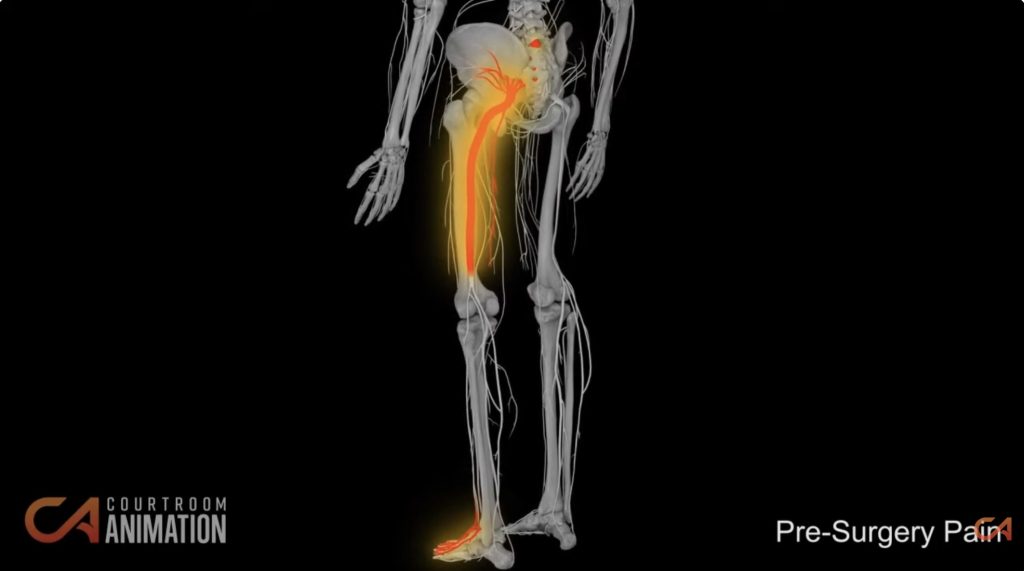

Why Medical Events Are Hard to Understand in Court
Medical testimony is complex by nature. It relies on anatomy, biomechanics, and physiology. Unfortunately, jurors rarely have clinical backgrounds.
As a result, even strong expert testimony can fall flat.
Studies consistently show that people process visual information faster and retain it longer than spoken words alone. When jurors cannot visualize an injury or procedure, comprehension suffers.
That gap creates risk.
However, well-designed visual exhibits close that gap. They transform abstract concepts into understandable events.
Visual Evidence Bridges the Comprehension Gap
Medical visuals do more than decorate a presentation. They translate complexity into clarity.
According to cognitive psychology research, visuals help audiences:
- Organize information
- Understand cause-and-effect
- Retain details longer
- Reduce cognitive overload
This is especially important in litigation. Jurors must absorb large volumes of information under time pressure.
When visuals support expert testimony, jurors follow the story more easily. As a result, they make more confident decisions.
The Best Way to Visualize Medical Events in Litigation
There is no one-size-fits-all solution. However, the most effective approach uses layered visual storytelling.
Below are the most impactful methods—ranked by clarity and courtroom effectiveness.
1. Medical Illustrations for Foundational Understanding
Medical illustrations provide structure.
They show anatomy accurately. They orient the jury. And they establish a baseline before more advanced visuals appear.
These illustrations work best when they:
- Match the expert’s testimony
- Highlight only relevant anatomy
- Avoid unnecessary labels
Because they are static, illustrations are ideal for depositions, mediation, and opening statements.
2. Colorized Radiology for Objective Proof
Radiology images carry authority. However, raw scans can confuse jurors.
That’s where colorization helps.
Colorized MRIs and CT scans guide the viewer’s eye. They emphasize pathology. And they reinforce credibility without exaggeration.
Most importantly, they allow jurors to see real data in a digestible format.
3. Injury Animations for Mechanism of Injury
When causation is disputed, animation becomes critical.
Injury animations show:
- How forces entered the body
- Why specific structures failed
- How symptoms developed over time
Because these animations unfold step by step, jurors can follow the sequence logically.
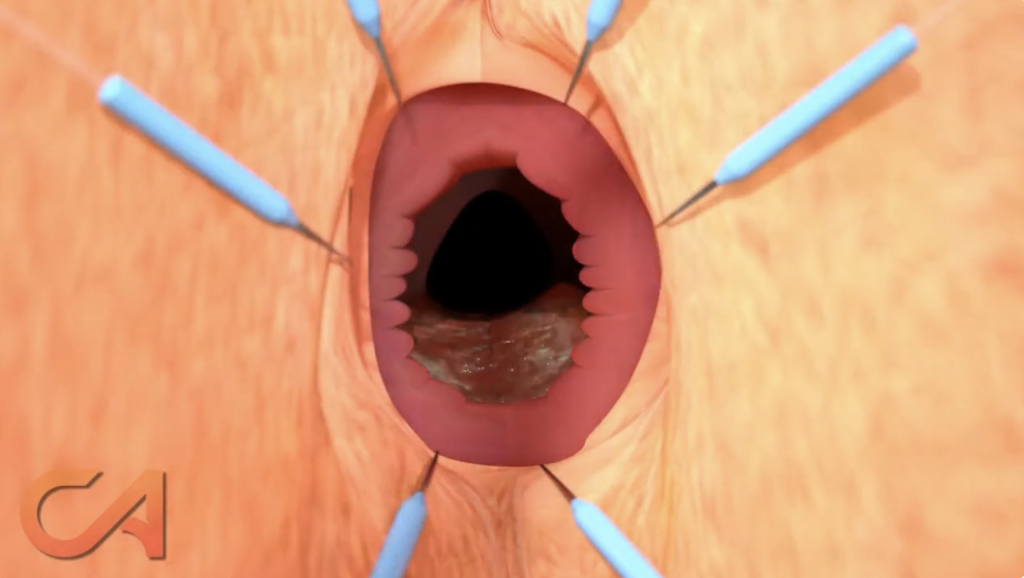
That clarity reduces confusion and limits speculation.
4. Surgical Animations for Long-Term Impact
Surgery changes lives. Yet jurors rarely understand what those procedures involve.
Surgical animations solve that problem.

They show:
- Invasiveness
- Hardware placement
- Permanency
- Risk
As a result, jurors better grasp future pain, limitations, and medical costs.
Why Accuracy Determines Admissibility
Visuals must do more than persuade. They must be admissible.
Courts require demonstrative evidence to fairly and accurately reflect expert opinions. Any exaggeration risks exclusion.
For that reason, the best litigation visuals are built:
- From medical records
- In collaboration with experts
- Using peer-reviewed references
Accuracy builds trust. Trust drives persuasion.
When Visuals Influence Outcomes Most
Medical visuals are powerful at every stage of litigation.
However, they are especially effective during:
- Mediation
- Expert depositions
- Pre-trial settlement discussions
- Trial
When opposing counsel sees a clear, credible visual narrative, risk becomes tangible. That often changes settlement dynamics.
Visualization Is a Strategic Advantage
The best way to visualize medical events in litigation is not about flash. It is about function.
Clear visuals educate.
Accurate visuals persuade.
Strategic visuals move cases forward.
When attorneys invest in the right visual tools, they reduce confusion and increase confidence—in jurors, mediators, and opposing counsel alike.
In modern litigation, understanding wins cases. Visualization makes understanding possible.
Final Thought
Medical cases are won on clarity.
When jurors can see what happened, they no longer guess. They decide.
And that is why visualizing medical events correctly is no longer optional—it is essential.
Free eBook: The Complete Introduction to Forensic Animation

Whether you are considering animation for one of your cases, or you simply want to be prepared for when the other party uses an animation, our eBook is your guide to understanding forensic animation.