
The Power of Visuals in Modern Litigation
Courtrooms have changed. Today’s jurors expect clarity and technology, not just testimony. As medical and personal injury cases grow more complex, medical animation companies are helping attorneys translate technical details into stories jurors remember.
Research confirms visuals improve comprehension. According to Assistant Professor of Medical Education, Tara Brigham, of Mayo Clinic Libraries people retain 65% of information when presented visually and verbally rather than through words alone (source).
That retention can decide the verdict. A clear animation showing the mechanism of injury or surgical procedure can turn confusion into understanding—and understanding into action.
What Are Medical Animation Companies?
Courtroom Animation specializes in transforming medical data into accurate, easy-to-digest visuals. They combine science, storytelling, and 3D technology to depict surgeries, injuries, and treatments with precision.
These animations are not marketing tools—they are demonstrative evidence. In the courtroom, they:
- Simplify expert testimony
- Show mechanisms of injury
- Visualize surgeries or medical procedures
- Clarify anatomy and complex data
- Strengthen emotional and factual storytelling
Many leading firms use animations to reinforce credibility and present medical evidence persuasively. They ensure every juror can follow the narrative, regardless of their background.
Why Medical Animation Works in Court
Juries are made up of everyday people—not medical experts. When expert witnesses describe a “lumbar laminectomy” or “closed reduction of a tibial fracture,” most jurors can’t visualize what that means.
That’s why Courtroom Animation exists: to turn complex terms into clear visuals that align with testimony and timelines.
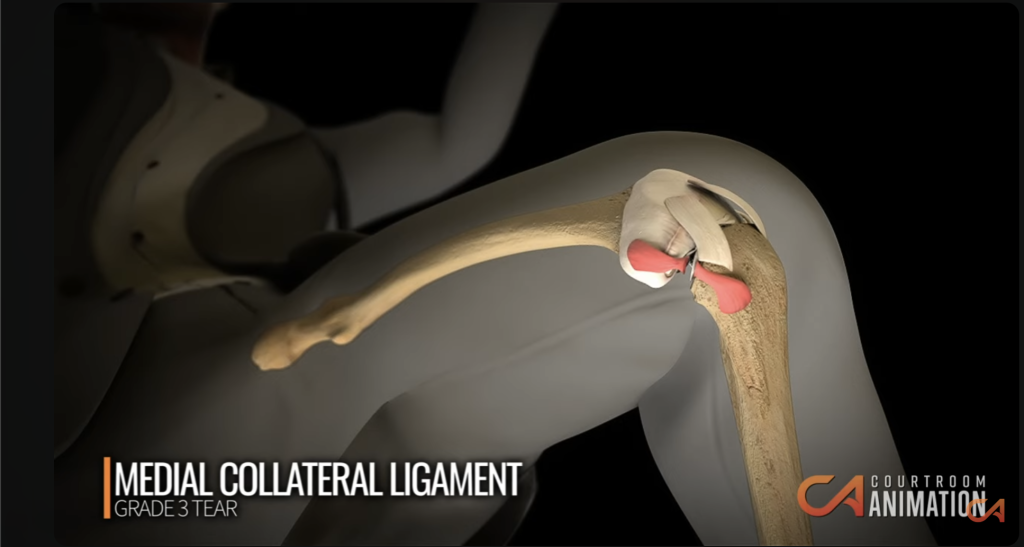
Visuals give jurors something to hold onto. They illustrate how an injury happened, what procedure occurred, and why it matters. When jurors deliberate, they often remember the animation over the spoken testimony.
A study from Proceedings of the National Academy of Sciences reported, “[V]isual memory for scenes is very robust. In the most dramatic demonstration, Standing showed observers up to 10,000 images for a few seconds each and reported that they could subsequently identify which images they had seen before with 83% accuracy. This memory is far superior to verbal memory and can persist for a week.” Source
The Stages of Creating a Medical Animation
Creating a courtroom-ready medical animation involves precision and collaboration. Here’s how most Courtroom Animation approaches the process:
1. Case Review and Data Collection
The animation team begins by reviewing medical records, radiology scans, surgical notes, and depositions. Every fact must align with the evidence presented in court.
2. Script and Storyboard Development
A storyboard outlines how the animation will unfold. It identifies the anatomy, sequence of events, and points of focus—whether that’s a surgical incision, internal injury, or the chain of medical treatment.
3. 3D Modeling and Visualization
Medical artists and animators use specialized software to create realistic anatomical models. Forensic accuracy is paramount.
4. Review by Medical Experts
Before final delivery, licensed physicians or surgeons review the animation for accuracy. This ensures the visual aligns with accepted medical standards.
5. Final Rendering and Courtroom Integration
Once approved, the animation is formatted for court presentation. It can be used during opening statements, expert witness testimony, or settlement negotiations.
Each step ensures that the exhibit strengthens your case, not weakens it.
Real-World Impact: Visualizing Evidence That Wins
The effect of medical animations in litigation is measurable. In one case, medical legal graphics were created on behalf of a plaintiff in a medical malpractice case. The 3D animation helped land an $8 million dollar settlement.
When you invest in professional visuals, you don’t just buy an exhibit—you invest in comprehension and persuasion.
How Medical Animation Clarifies Expert Testimony
Expert witnesses are vital, but their testimony can overwhelm jurors with jargon. Medical animation simplifies that language.
Imagine a surgeon describing how a fractured femur was stabilized using internal fixation. Without a visual, that testimony sounds abstract. But when the jury sees a 3D animation of the bone, the metal rods, and the healing process, they instantly understand the procedure’s difficulty and necessity.
This clarity builds credibility for your expert. When jurors trust the expert, they trust your case.
Demonstrating Timelines Through Medical Animation
Medical cases often unfold over months or years. Injuries lead to surgeries, therapies, and long recoveries. A medical animation timeline can condense those years into minutes, making it easier for jurors to follow cause and effect.
For instance, a visual can show the chain of medical care after a car accident—from the ER visit to multiple surgeries and rehabilitation sessions. Each phase connects visually, reinforcing how the initial injury led to ongoing medical challenges.
By visualizing these steps, you’re not just explaining facts—you’re telling what happened.
How Medical Animation Helps Both Sides
While plaintiff attorneys often use animations to demonstrate injury or negligence, defense teams benefit as well.
For defendants, medical animation visualizes alternative causes of injury or highlight standard-of-care procedures. By illustrating how the treatment met accepted guidelines, they can reduce the emotional bias jurors may feel toward the plaintiff.
In both cases, the goal is the same: clarity and fairness.
Common Misconceptions About Medical Animation
“They’re too expensive.”
Not necessarily. Courtroom Animation offers scalable options—from still illustrations to detailed 3D animations—fitting different budgets and case values.
“They might not be admissible.”
When created with accuracy and verified by medical experts, animations meet admissibility standards. Courtroom Animation, for instance, maintains a 99% admittance rate across more than 2,000 cases (Courtroom Animation).
“They replace testimony.”
Animations don’t replace experts—they enhance them. They make testimony more memorable and credible by aligning visuals with verbal explanations.
The Future of Medical Animation in Court
Technology is advancing fast. With AI-assisted modeling and real-time rendering, Courtroom Animation can now produce more accurate visuals in less time.
Courts are also adapting. Many federal and state courtrooms now include large monitors, digital projectors, and high-resolution display systems to accommodate digital demonstratives.
As legal technology evolves, the demand for clear, visual communication will continue to rise. Attorneys who adopt these tools early are seeing the payoff in verdicts and settlements
Final Thoughts
Complex medical cases demand more than verbal explanation. They need clarity, precision, and emotion. Courtroom Animation bridges that gap. We turn surgical data and expert testimony into powerful visuals that juries remember—and trust.
If your case involves medical evidence that needs to be seen to be understood, now is the time to invest in professional legal animation.
Request a customized quote and see how medical animation can strengthen your next trial.
Free eBook: The Complete Introduction to Forensic Animation

Whether you are considering animation for one of your cases, or you simply want to be prepared for when the other party uses an animation, our eBook is your guide to understanding forensic animation.